
.svg)
More Blog Posts Coming Soon!
Sign up to receive alerts when we publish more blog posts about how NLPatent has brought success to the field of IP and AI.

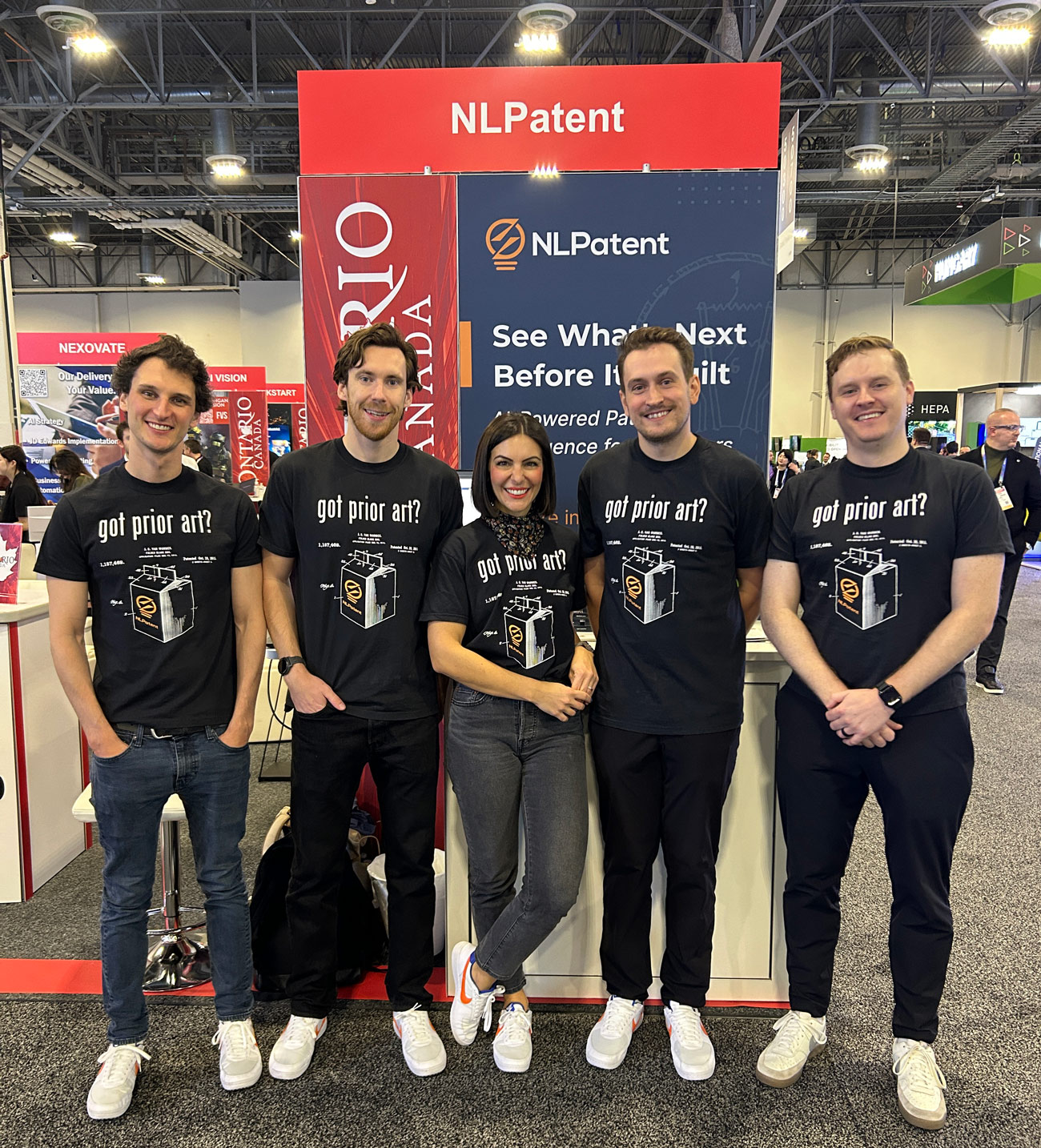
We started 2026 with our first-ever Consumer Electronics Show (CES) experience in Las Vegas, representing NLPatent as part of the Ontario delegation. As an AI patent research & intelligence software vendor, walking into the world’s largest technology conference for the first time was both energizing and eye-opening. From our perspective, CES is much more than just a trade show; it's a real-time snapshot of where innovation is heading, how quickly competitive landscapes are shifting, and how IP is underpinning it all.
From global startups to established enterprises, CES reinforced one clear message: innovation is accelerating, competition is intensifying, and differentiation is harder than ever to maintain.
Here are our key executive-level takeaways from CES 2026.
CES made it clear just how crowded every technology segment has become. Across hardware, robotics, wearables, smart home, and mobility, there were countless versions of similar products, including an impressive number of autonomous lawnmowers!
AI is a major driver here. Development cycles are shrinking. Companies can design, prototype, and launch faster than ever. While this speed is impressive, it also means competitors can replicate ideas quicker than ever. Innovation windows are shorter, and the first-mover advantage is fading.
In this environment, finding true whitespace early is critical. Organizations need to move beyond trend-chasing and identify where real unmet needs exist. Once that space is identified, protecting it becomes just as important as building it.
CES reinforced a hard truth: If you don’t protect what makes you different, someone else will move faster and capture that opportunity.
One of the most striking aspects of CES was its international presence. Companies from every region were showcasing products, highlighting just how interconnected global innovation has become.
Today’s supply chains, R&D teams, and product strategies span continents. Competition is no longer regional, it’s global. The next disruptive product could emerge from anywhere.
For executives, this means:
CES was a powerful reminder that winning tomorrow requires global awareness today.
The sheer volume of innovation on display was remarkable. From robotic companions to AI-driven assistants and automation tools for nearly every task imaginable, CES showcased what’s possible when creativity meets technology.
But with breakthrough innovation comes risk.
Many of these products are truly differentiated, which also makes them vulnerable. Without strong IP protection, even the most groundbreaking ideas can be quickly copied or challenged.
CES reinforced a critical reality: Innovation without protection is exposure.
As organizations invest heavily in R&D, IP strategy must evolve from a legal safeguard to a business enabler. Protecting innovation can’t simply be reactive; it needs to be proactive and embedded in product strategy from day one.
CES offered a glimpse into what the next decade will look like:
What stood out was how seamlessly these technologies are being integrated into everyday life. Innovation today is about user experience, heavy personalization, and intelligent automation, not just new devices for the sake of flashy tech.
For business leaders, this means staying ahead of:
Despite all the futuristic technology, the core driver of innovation is still human need. Every product at CES was built to solve a real problem, physical, emotional, or intellectual.
Innovation isn’t about technology for technology’s sake. It’s about:
This human-centered lens is what makes innovation meaningful and what makes protecting it so important. When you solve a real problem, that solution deserves long-term ownership and protection.
One unexpected highlight was how many patent professionals were at CES and how many non-IP leaders wanted to learn more about intellectual property.
We spoke with:
All asking strategic questions:
It’s clear IP top of mind for everyone in the ecosystem, not just attorneys.
We also noticed how similar many hardware products were. Differentiation is increasingly difficult to measure at face value which makes IP strategy a competitive advantage. When products look alike, your protection strategy becomes your moat.
CES reinforced why strategic IP intelligence matters more than ever:
Organizations can no longer afford to:
The winners will be the companies that:
CES 2026 was the perfect way to start the year.
We left with:
For us, CES lived up to its expectations - it’s a four-day, action packed, window into the future.
And the way we see it, the future belongs to those who protect what they create.

Sign up to receive alerts when we publish more blog posts about how NLPatent has brought success to the field of IP and AI.
.svg)
.png)
